Cannabis Rolling Insights
Which Joint Tip Material Should You Actually Use?

Most rollers start with whatever cardboard is in the back of their pack of papers. You tear a strip, accordion it, roll it into a cylinder, and call it a crutch. Then you smoke at a friend's place, they hand you a joint with a glass tip clamped at the end, and the whole experience is different. Smoother draw. No soggy paper at your lips. The joint actually looks like a joint instead of a soggy french fry.
That moment is where most people start asking the next question. Is glass the answer? What if I need a tip that's easy to roll with? Is there something better? Is there something that's high quality but doesn't cost 40 bucks per tip and doesn't shatter when you drop it? Here's the honest comparison.
Cardboard crutches
The strip torn off the inside of your paper pack. It's free, lightweight, and universally available.
The case for: you cannot lose money on a crutch you made out of trash. There's a real charm to the ritual of folding one before every roll. And the resulting joint draws fine for the first half of the session.
The case against: by the back half of the joint, the cardboard is wet from your lips and starting to compress. The draw gets tighter, the airflow drops, and the last few hits are working through what amounts to a wet sponge. It's also very difficult to roll with, leading to discouraging first time rollers.
Cardboard is fine for what it is. It is the disposable option that usually works. It is not what you want when you've decided you want an easy roll and good-looking joint.
Glass tips
A short glass cylinder, sometimes flared at one end, sometimes with internal baffles or designs along the side. Smokes beautifully. The airflow stays consistent from the first hit to the last. The lip end stays clean and doesn't become soggy. Held up to the light, a well-made boroscillate glass tip is genuinely a small piece of art.
The case for: prime smoking experience. Airflow is what you optimize for in a tip, and glass nails it. You can also collect them. There's a real community around makers like Goat, Glaskosmos, and various solo glass artists, and a 13mm or 14mm glass tip in your kit becomes a thing you can show off at your next smoking session.
The case against: glass breaks. Glass also is slippery, so it is difficult to roll with, and it can slip out of your joint easily. Not ideal for taking with you if you are smoking outside the comfort of your home. And the price per tip is twenty to fifty dollars for borosilicate glass made outside of China, which means losing or breaking one is a real loss. Glass tips reward people who keep them at home, in a stash, and don't travel with them.
Wood tips
Hardwood or bamboo, usually around 11mm or 13mm, often with a small interior bore.
The case for: easier to roll than glass, durable, can survive being dropped, and gives you most of the airflow benefit of glass without the breakage anxiety.
The case against: wood absorbs. Over time the inside of a wood tip stains and starts holding flavor from previous sessions, in a way that is not the kind of flavor anyone wants. They're a middle ground that ends up feeling like a compromise. The people who really love them swear by them. The people who try them once usually go back to glass or move to reusable.
Schtips tips
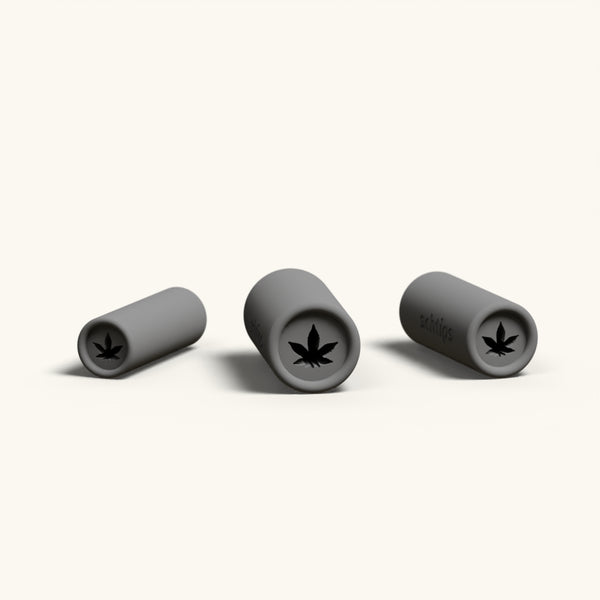
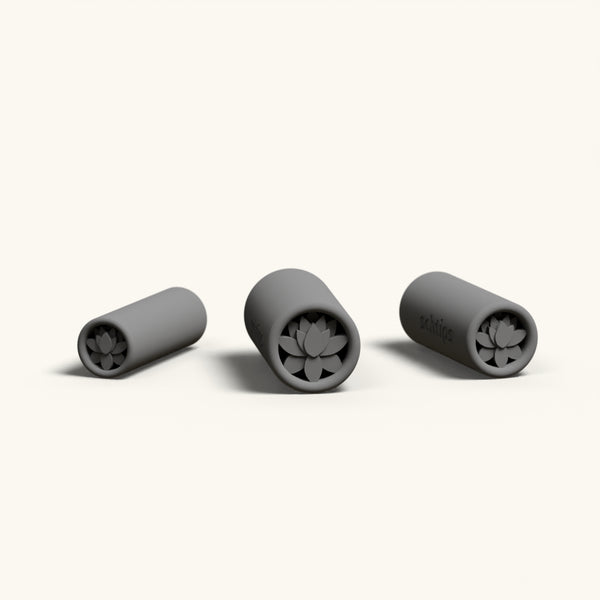
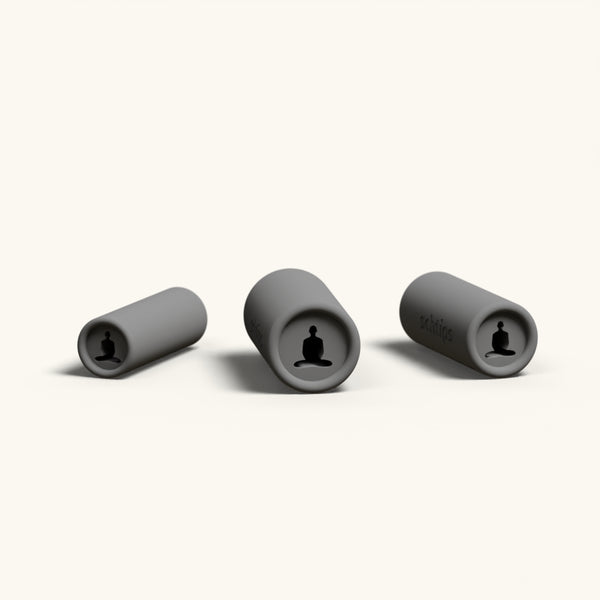
The newer category. A short tip made from a heat-resistant elastomer, designed specifically for this application. Schtips reusable joint filter tips are what we make. You can keep one in its case in your pocket all day, drop it, sit on it, and it's fine. Rinse it under hot water at the end of the night, dry it off, it's ready for tomorrow.
The case for: the easiest roll with the airflow benefit of glass and none of the fragility. They come in a pack of 8mm, 10mm, and 12mm tips, so you can have any sized joint at a moment's notice. They are also great for new rollers because of how easy they are to roll with.
The case against: we are the only company that sells these tips. They are less readily available. Similar to glass tips, you have to clean them.
How to actually pick
If you're rolling on the go, can't be precious about your gear, and don't want to think about cleaning anything, a Schtips tip is the right pick. If you mostly smoke at home, are an expert roller, and don't mind the maintenance, glass is the best option. If you want a single durable tip that lasts years and don't care about added taste, wood is fine. Cardboard is fine if you want zero commitment and don't mind the soggy draw.
If you've landed on reusable and you want to start somewhere, the Premium tier set covers the three working sizes (pinner, classic, fatty) in a single jar, and the Signature collection is where the more detailed designs live. Dispensaries thinking about putting their own logo on a tip can order fully custom joint filters once a render has been approved.
The tipping point for most people is the first time they smoke a joint with a real tip in it. After that you can't unknow it. Pick the version of tip that fits your life and don't overthink it.